Millions turn out as service delivery, political accountability dominate local elections
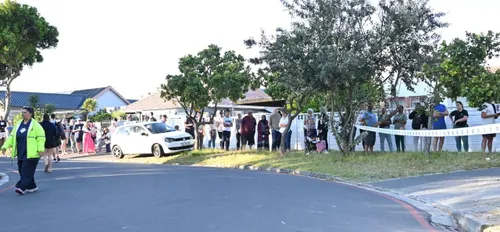
Millions of South Africans turned out at voting stations across the country on Wednesday to exercise their democratic right, with long queues reported in townships and suburban communities as voters decided who should lead their municipalities for the next five years.
Preliminary figures released by the Electoral Commission of South Africa (IEC) indicated that approximately 12 million voters had cast their ballots by 5pm, with Gauteng recording the highest number of votes.
The figures, announced by IEC Chief Electoral Officer Sy Mamabolo while voting was still under way, offered an early indication of participation in an election that has placed service delivery and political accountability firmly in the spotlight.
The commission said it was encouraged by the participation recorded at voting stations but urged those who had not yet voted to use the remaining hours before the scheduled 9pm closure.
“Voting has progressed well across the country, notwithstanding a few isolated incidents,” Mamabolo said.
He added that arrangements had been made to ensure voting and counting could continue in areas experiencing electricity outages.
“As voting enters the evening period, adequate arrangements have been made to ensure the availability of generators and alternative lighting facilities at voting stations in areas that have experienced electricity outages, thereby ensuring that the counting process proceeds without unnecessary disruption.”
The preliminary provincial breakdown placed Gauteng at the top with approximately three million votes, followed by KwaZulu-Natal with 2.5 million, Western Cape with 1.5 million, and the Eastern Cape with 1.4 million.
Limpopo recorded 1.1 million votes, while Mpumalanga recorded 854 901, North West 702 133, Free State 588 237, and Northern Cape 299 381.
A total of 29.2 million voters were registered for the elections, which covered 23 696 voting stations. Approximately 188 000 electoral officials were deployed to administer the process.
Wednesday’s voting followed two days of special voting on November 2 and 3, which allowed approved voters unable to visit voting stations on election day, including those requiring home visits because of physical infirmity or disability, to cast their ballots in advance.
The IEC reported that 1 425 942 voters had cast special votes during the two days, out of approximately 2.65 million approved applications.
Of the special votes cast, 974 852 were recorded at voting stations, while 451 090 were conducted through home visits. The ballots were securely stored and would be counted alongside election-day ballots after voting stations closed.
Siseko Maposa, director of Surgetower Associates Management Consultancy, said the special voting figures reflected significant participation ahead of election day.
“Whilst the total voting tally is yet to be seen, in the 2026 local government elections, actual special votes cast reached record heights with 1.4 million citizens successfully casting their ballots ahead of election day,” Maposa said.
However, he cautioned that the overall turnout percentage could still fall below 60%, despite the high number of registered voters.
“However, the overall turnout percentage may likely still sit below 60%, which, in a constitutional democracy, remains far too low,” he said.
Maposa also highlighted the gap between digital engagement and actual participation, noting that only 53.7% of approved special voters had cast their ballots.
“It is a classic symptom of political apathy: citizens are highly active on digital interfaces, but far less inclined to physically exercise their hard-won democratic right.”
Political analyst Sandile Swana said the elections were taking place against a backdrop of significant public appetite for political change, alongside declining trust in political institutions.
“The appetite for change is enormous, but trust is very low. The ANC is at risk of its own supporters staying away. At the same time, the younger parties, including MKP and EFF, are likely to benefit.”
Swana also raised concerns about potentially lower participation in parts of North West and the Western Cape, although final provincial turnout figures would be needed to establish the extent of participation.
Freedom Front Plus's Pieter de Necker said turnout should be examined geographically, particularly in areas where fewer voters had made their way to polling stations.
“It's important to find out why there's a low voter turnout in certain areas. But we are to see that in some areas there was a good turnout,” De Necker said.
He suggested that voter apathy could reflect dissatisfaction with municipal performance and declining confidence in political leadership.
“When voters don't vote, that means they are unhappy with service delivery. That is often a good sign that people are unhappy and they have lost trust in the system,” he said.
Meanwhile, ActionSA's Matthew George said the party was encouraged by the queues reported across suburban and township communities.
“We are very encouraged to see the long lines that are forming across the country, in suburban areas and township communities as well,” George said.
The 2026 elections come at a critical moment for South African politics, with municipalities facing mounting pressure over basic service delivery, financial management, infrastructure maintenance, and political stability.
Municipal decisions directly affect residents’ access to water, electricity, sanitation, refuse removal, roads, and local economic development.
The elections also follow the 2021 local government polls, when the ANC received less than 50% of the national vote for the first time in a local government election since the advent of democracy in 1994.
The party subsequently lost its national parliamentary majority in the 2024 general elections, resulting in the formation of a Government of National Unity.
The latest municipal contest therefore carries implications beyond the allocation of council seats, as political parties seek to consolidate support and negotiate their positions in municipalities where no single party secures an outright majority.
Related Topics
Keywords
Related Stories
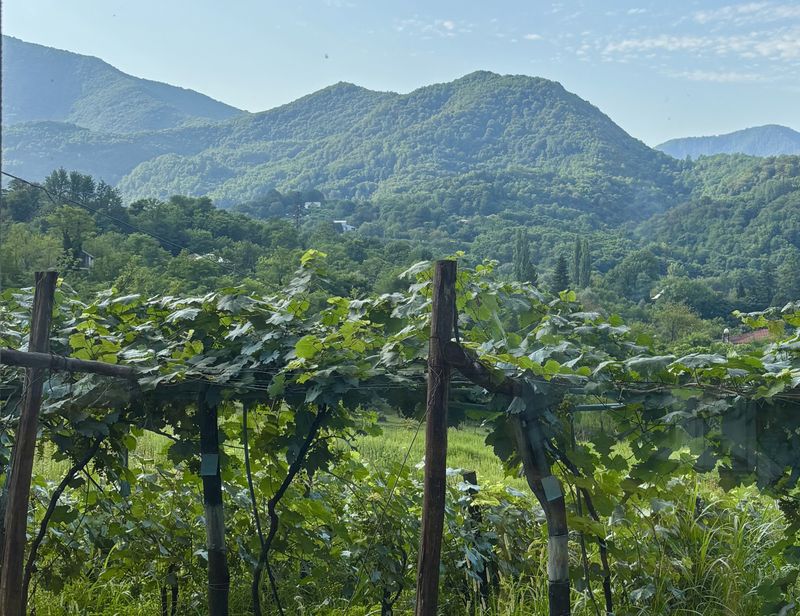
ORIGIN STORY: Georgia’s wines take you on a wild but enjoyable ride
As with anything you should start at the beginning. And Georgia’s long history of wine – it was invented here, 8,000 years ago – is as rich and complex as they come, a whole universe to unpack.
WHAT’S COOKING: Roast chicken with a walnut and date stuffing
Here’s a recipe first published in 2022, delivered to you again while your Food Editor is on leave. A stuffing of walnuts and dates with fynbos herbs makes this fresh way with a roast chicken a class act worth sharing with friends at the dinner table.

Osun govt warns Oluwo over alleged ‘inflammatory’ remarks, fears religious, communal conflicts
The Osun State Government directed the Oluwo to refrain from public statements capable of triggering religious and inter-town conflicts. The post Osun govt warns Oluwo over alleged ‘inflammatory’ remarks, fears religious, communal conflicts appeared first on Premium Times…

Man shot dead outside Bushbuckridge voting station
Police are investigating a case of murder after a fatal shooting outside a voting station in MP

Top Stories
ORIGIN STORY: Georgia’s wines take you on a wild but enjoyable ride
WHAT’S COOKING: Roast chicken with a walnut and date stuffing
Osun govt warns Oluwo over alleged ‘inflammatory’ remarks, fears religious, communal conflicts

Career-best Wembanyama display seals Spurs win
Man shot dead outside Bushbuckridge voting station

England captain Kane signs new Bayern contract

Tomi Falade leads Nigerian writers to 2026 Helsinki Book Fair
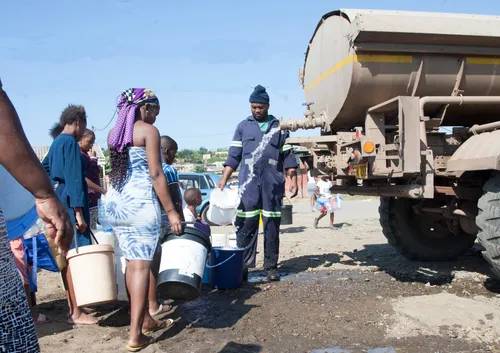
Water, electricity failures dominate voters’ concerns across South Africa
Latest
ORIGIN STORY: Georgia’s wines take you on a wild but enjoyable ride
WHAT’S COOKING: Roast chicken with a walnut and date stuffing
Osun govt warns Oluwo over alleged ‘inflammatory’ remarks, fears religious, communal conflicts
Career-best Wembanyama display seals Spurs win
Man shot dead outside Bushbuckridge voting station
England captain Kane signs new Bayern contract
Tomi Falade leads Nigerian writers to 2026 Helsinki Book Fair
Water, electricity failures dominate voters’ concerns across South Africa