Sardine fishing in South Africa on hold after mass mortality linked to virus
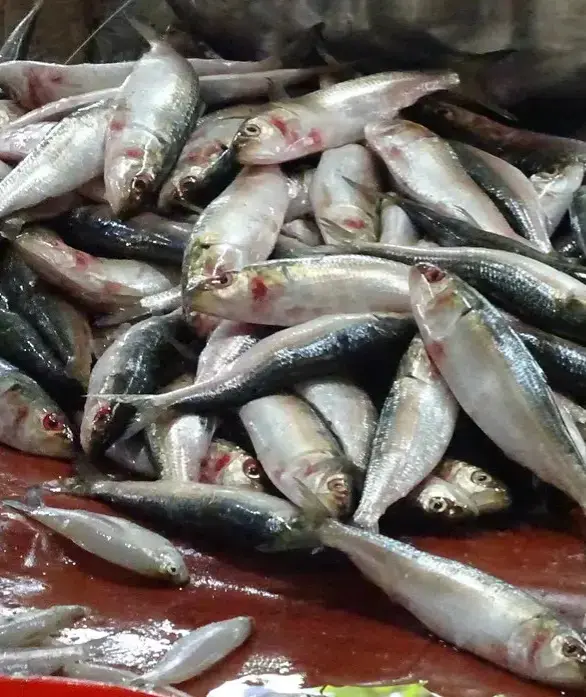
Sardine fishing remains on hold while the department of forestry, fisheries and the environment considers new management measures after a mass mortality event linked to pilchard herpesvirus (PHV).
In a statement on Monday, the department said previous management measures had expired on 31 October and no sardine fishing would be permitted until new measures had been approved and communicated.
The Small Pelagic Scientific Working Group met on 27 October to review updated sardine catch information, automated penguin weighbridge data, fishery-related socio-economic information and population model projections. It submitted a recommendation for November management measures, which the department is considering.
The department said it had not received reports of a recurrence of the widespread mortality recorded between late July and early September. A small number of juvenile sardines washed ashore near Mossel Bay on 23 October, however, and samples were being tested for PHV. It was not yet known whether the incident was related to the earlier outbreak.
The current pause comes amid growing pressure from four environmental organisations for a suspension of directed sardine fishing until the population can be properly assessed.
In a letter to Forestry, Fisheries and the Environment Minister David Maynier on 23 October, the Biodiversity Law Centre, with The Green Connection, Whale Coast Conservation and the Dyer Island Conservation Trust as co-signatories, called for a moratorium until the 2026 spawner biomass survey had been completed and a new total allowable catch (TAC) determined.
The organisations questioned an increase in the permitted catch in October despite continuing uncertainty about the impact of the mortality event.
The September recommendation limited each sardine right holder to 25% of its remaining directed sardine TAC. The October recommendation increased this to 33%, raising the combined permitted catch from about 4 000 tonnes to 5 500 tonnes, according to the organisations’ calculations.
The annual directed sardine TAC of 51 800 tonnes had been set in April, based on the February/March 2026 biomass survey, before the PHV outbreak. The organisations said the September and October recommendations did not revise the quota in response to the mortalities.
They said the increase was not supported by new information confirming the health of the stock. Their account of the working group’s recommendations says directed sardine fishing in September was extremely limited: no directed catch was reported west of Cape Agulhas and only 26 tonnes were caught east of it.
The October recommendation acknowledged uncertainty about the overall impact of the mortality event and the possibility of a further outbreak. Penguin monitoring had shown possible changes in penguin weights but their magnitude and connection to the sardine mortalities remained unclear. Hydroacoustic observations were qualitative and required further processing.
The recommendation recorded that conservation-sector biologists and environmental organisations had argued for a moratorium but the working group rejected the proposal.
The organisations said the group considered that a moratorium would carry substantial socioeconomic costs while probably providing little benefit to predators. The organisations said the recommendation did not disclose the evidence supporting that assessment.
They also questioned the transparency of the department’s decisions, saying they had not received the formal records, reasons or legal basis for adopting the September and October recommendations.
They said the working group was an advisory body, not a statutory decision-maker, and that officials adopting its recommendations had to apply their own minds to the evidence and relevant environmental laws.
The organisations raised concerns about whether the biomass survey would be completed before the end of the year. They said that in four of the past five survey years it had not been conducted in October or November, while the past three surveys had taken place between February and April of the next year.
The department issued a tender for a survey vessel on 16 September, with bids closing on 23 October. The organisations also cited maintenance difficulties with the research vessel RS Africana and considered it improbable that the survey would be completed before the end of 2026.
The department said planning continued for an end-of-year hydroacoustic survey, which it expected to provide the first fisheries-independent estimate of sardine biomass, distribution and size structure after the mortality event.
The organisations said that the precautionary principle in the National Environmental Management Act and the Marine Living Resources Act required a risk-averse approach despite uncertainty about the scale of the mortalities.
“The consequences of getting this wrong are not equal,” they wrote. If fishing were suspended and the stock proved healthy, the fish would remain in the water and could be caught later under a revised TAC. If fishing continued and the stock proved severely depleted, fish that had landed could not be returned.
They called on Maynier to suspend all directed sardine fishing until the survey had been completed and a new TAC determined and published. They also requested the records and reasons for the department’s decisions.
The organisations said the department had acknowledged that the impact of the mortality event on sardine biomass could not be properly assessed until the survey was conducted.
“Knowing how much of the population is left is fundamental to decisions about the sustainability, or otherwise, of continued fishing,” they wrote.
The consequences of a further decline could extend beyond the fishery. In an August letter to Maynier, the Biodiversity Law Centre and The Green Connection warned that African penguins, which depended on small pelagic fish such as sardines and anchovies, were particularly vulnerable.
They noted that African penguins were critically endangered and could become functionally extinct in the wild by 2035 if current trends continued.They also cited estimates that the collapse in sardine biomass between 2004 and 2011, when fishing exploitation was reportedly as high as 80%, contributed to the loss of about 95% of the breeding population at Dassen and Robben islands.
The August letter warned that the South African sardine population had no previous exposure to PHV and was immunologically naïve to the virus. It assessed that a population-level impact of up to 70% was “plausible, if not probable”.
They, too, warned of consequences for fishing communities. Sardines and anchovies are important prey for predators including snoek, which the August letter described as “the bread and butter of many small-scale fisher livelihoods”.
The fish are also principal bait for handline snoek and hake fisheries, while sardine is listed as a bait species in the department’s permit conditions.
The letter cited research in KwaZulu-Natal in which sardines accounted for about 88% of net-fish catches.
Small-scale fishers had limited ability to absorb a shock to the resource, the organisations said, because their near-shore operations left them with little capacity to follow fish to other grounds or wait out a poor season.
The department said PHV was not known to infect people and that regulated commercial sardine products remained safe to eat. It advised the public not to collect or consume dead or dying sardines, feed them to animals or use them as bait.
This department had not responded by the time of publication.
Related Topics
Keywords
Related Stories
Keisha Lance Bottoms wins Georgia race, becomes first Black woman elected governor of US
Nov 3 - Democrat Keisha Lance Bottoms won Georgia’s race for governor on Tuesday, becoming the first Black woman elected governor of a US state and delivering Democrats a victory in one of the nation's most closely divided political battlegrounds.

BOOK EXCERPT: Scorpio Rising — The latest thriller from SA’s master of crime fiction
From bestselling South African crime fiction author Deon Meyer comes a thriller that perilously entwines local and international threats.

Democrats gain ground in battle for Congress with North Carolina flip
WASHINGTON, Nov 3 (Reuters) - Democrats flipped a Republican-held Senate seat in North Carolina and were showing surprising strength across several Republican-leaning House districts in Florida on Tuesday, boosting hopes they could wrest control of Congress from President Donald…

Unsafe Hostels, Other Facilities: How UNIJOS fails students with disabilities
Students with disabilities at the University of Jos face barriers to independent living and learning due to inaccessible hostels and classrooms. The post Unsafe Hostels, Other Facilities: How UNIJOS fails students with disabilities appeared first on Premium Times Nigeria.

Top Stories
Keisha Lance Bottoms wins Georgia race, becomes first Black woman elected governor of US
BOOK EXCERPT: Scorpio Rising — The latest thriller from SA’s master of crime fiction
Democrats gain ground in battle for Congress with North Carolina flip
Unsafe Hostels, Other Facilities: How UNIJOS fails students with disabilities
Activist challenges Cape Town’s smash-and-grab strategy in Elsies River
Election Day heat warning: Gauteng Health urges voters to take precautions against heatstroke
GRWM, OOTD and brunch: Fun ways to mark South Africa’s 2026 voting day

UCL Roundup: Usor bags assist as LASK win big, Man United stage stunning comeback


Latest
Keisha Lance Bottoms wins Georgia race, becomes first Black woman elected governor of US
BOOK EXCERPT: Scorpio Rising — The latest thriller from SA’s master of crime fiction
Democrats gain ground in battle for Congress with North Carolina flip
Unsafe Hostels, Other Facilities: How UNIJOS fails students with disabilities
Activist challenges Cape Town’s smash-and-grab strategy in Elsies River
Election Day heat warning: Gauteng Health urges voters to take precautions against heatstroke
GRWM, OOTD and brunch: Fun ways to mark South Africa’s 2026 voting day
UCL Roundup: Usor bags assist as LASK win big, Man United stage stunning comeback