The ANC is still the largest party, but its mandate is shrinking
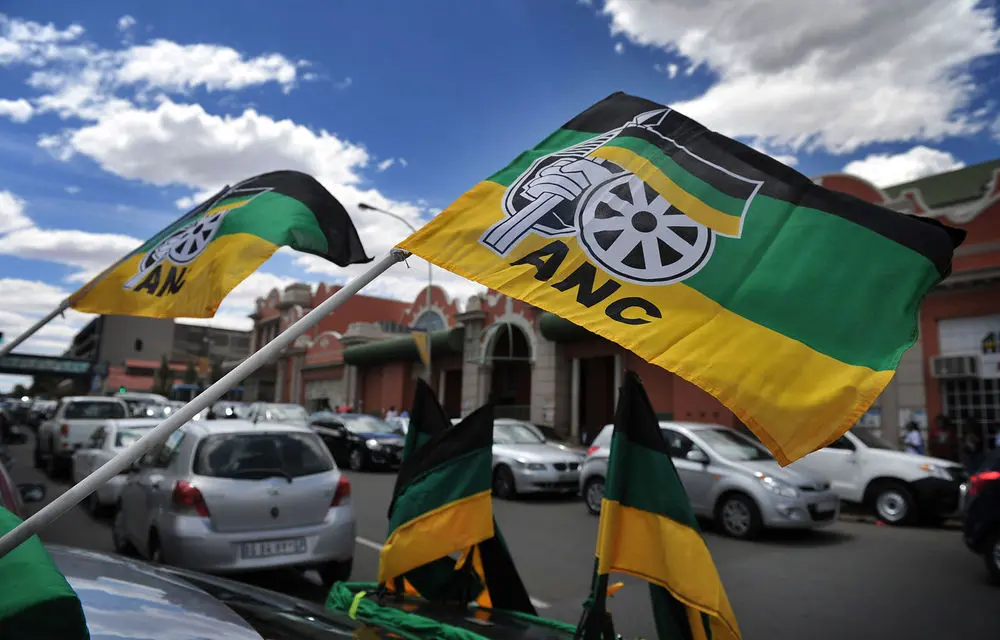
“Largest” did a great deal of heavy lifting in the ANC’s media briefing led by the party’s Secretary-General, Fikile Mbalula, at the National Results Operations Centre in Midrand on Saturday, 7 November. What it masks is that, at 23 353 comparable voting stations, the ANC lost nearly 700 000 votes even as more South Africans voted. Mbalula is right that the ANC remains the largest party in South Africa, and with 99% of voting stations counted (as at 15:00 on 7 November), it holds 30.91% of the vote.
He also pointed to the municipalities it has won outright. But IEC data shows the ANC took 45.49% of the vote five years ago, and its share has since fallen by a third. A closer look at the voting-station data tells a harder story than the percentages do.
Turnout rose, yet the ANC fell
Data from the PCRH’s Missing Voter Tracker, which compares ward votes at the same voting stations in 2021 and 2026, shows that the ANC received 4 496 869 votes at these stations, down from 5 186 014. That is a loss of 689 145 votes, or about 13%.
Over the same period, the number of ward votes cast rose from 11 496 662 to 14 576 511, an increase of 3 079 849, or 27%. Turnout of registered voters at these stations climbed from 45.6% to 52.3%. The ANC’s vote fell while the total vote grew by more than a quarter.
The usual explanation for a governing party’s decline in a local election is that its supporters stayed home. On its own, that explanation cannot survive these numbers.
The fact is that more South Africans came out to vote, and fewer of them chose the ANC.
A lead cut by two-thirds
In 2021, at these stations, the ANC won more than twice as many votes as the DA, leading by 2 707 890. This year, ANC leads by 937 176, and it is barely a quarter ahead. Nearly two-thirds of the gap has gone in a single term.
Moreover, ‘largest’ must also be measured against the missing voters who took no part at all. These are the millions of eligible citizens who never registered, and millions of registered voters who did not vote. The ANC’s roughly 4.5 million ward votes at these stations amount to about one in ten of the 44.9 million South Africans that Ipsos estimates are eligible to vote. For the ANC, being the ‘largest’ means coming first among those who voted. It does not mean winning the electorate because nearly half of all registered voters stayed home, and more than 15 million eligible citizens never registered at all. Together, the 13.7million registered voters who stayed home and the 15.7million eligible citizens who never registered number nearly 30 million; they are South Africa’s missing voters. That absent majority weakens the ANC’s mandate, and every other party’s too.
The new votes were found, not taken
The arithmetic of this election is unusually clear. According to PCRH’s Missing Voter Tracker analysis, the parties that grew gained 4 025 092 votes at these stations, while the only two major ones that shrank, the ANC and the EFF, lost 945 243. Even if every lost vote went to a rival, at least 3 079 849 of the gains came from people who did not cast a ward vote at these stations five years ago. That is three-quarters of all the growth, which points to mobilisation, bringing new people to the polls, rather than persuasion, winning over other parties’ voters.
The DA grew by 1 081 569 votes, more than the ANC and EFF lost combined. MK drew 1 392 945 votes in its first local election, also more than those two parties’ combined losses. In other words, both must have drawn new voters. ActionSA, meanwhile, more than tripled its vote.
The largest constituency cast no vote
The largest group in this election were those who did not participate. According to the IEC, about 15.9 million of 29.2 million registered voters cast a ballot, which means some 13.3 million stayed home, about 84 for every 100 who voted. Using Ipsos estimates that 44.9 million South Africans are eligible to vote, and with 29.2 million registered, some 15.7 million eligible citizens never registered at all. This points to the fact that about 29 million South Africans had no say in the outcome. That is almost the size of the entire voters’ roll, and nearly twice the number who voted.
The pattern is sharpest in the Eastern Cape, Limpopo, and North West, where more registered voters stayed home than voted. The ANC still leads in all three provinces, and in Limpopo and North West its vote grew. Its heartland is not collapsing, but it appears to be under-mobilised because the voters it most needs are the ones staying home.
2029 is closer than it looks
The temptation after a result like this is to treat 2029 as distant when it is not. Anyone who has run a campaign knows that election time is like airport time. You arrive with hours to spare, and departure feels far off. Then come the queues, the security line, the gate that has moved, and the time that felt generous is gone. The gate closes whether you are ready or not. As Steve Jarding, the campaign strategist and former Harvard Kennedy School lecturer, told our team during a masterclass, “In a campaign, time is your friend, until it isn’t.”
Between now and the 2029 national elections lie coalition negotiations, municipal budgets, candidate selection, and registration drives. Registration closes long before polling day, and the voters who moved in 2026, when about a fifth of the vote shifted between parties, will not wait for a campaign to remember them.
The accurate reading of the data is not that the ANC is finished, nor that its rivals have won the country. It is that no party inherits loyalty anymore and rather, loyalty is earned again, ward by ward, and the largest constituency is still waiting to be reached.
Percentages tell us who won but voter numbers tell us who took part, and who did not. The parties that lead in 2029 will be those that start now, counting who left in 2026, and where. The clock is already running.
Delta Milayo Ndou is Executive Lead of the Political Campaigns Resource Hub (PCRH), a subsidiary of the International Centre for Political Campaigns (ICPC). She is a campaign strategist with a decade of experience, and co-convenes How to Run and Manage a Winning Campaign, an executive short course run by PCRH and the University of Cape Town. @MilayoNdou
Originally published and reported by Mail & Guardian.
Read original coverage on Mail & GuardianKeywords
Related Stories
STEPPING UP: Simon Harmer’s transition from exile to Proteas’ top Test spinner
The spin bowler will surely be in the running for future Proteas inclusion after a magnificent performance against Australia in Cape Town.

CULTURAL TENSIONS: Is halaal food becoming more common in SA? Debunking viral myths
South Africa’s halaal food debate exposes misunderstandings about Islamic slaughter, religious freedom, voluntary certification and the commercial forces behind the growing number of halaal products.
ActionSA says stronger election result could give it coalition influence
ActionSA says stronger election result could give it coalition influence
Death of the ANC: Party suffers worst municipal result since 1994 as support falls to 30.81 percent
The ANC’s support has fallen to 30.81% in the 2026 local government elections, its worst municipal result since 1994, leaving it without an outright majority in any metro and facing renewed questions about its leadership.

Top Stories
STEPPING UP: Simon Harmer’s transition from exile to Proteas’ top Test spinner
CULTURAL TENSIONS: Is halaal food becoming more common in SA? Debunking viral myths
ActionSA says stronger election result could give it coalition influence

Australia reach World Cup final after Fiji scare
Death of the ANC: Party suffers worst municipal result since 1994 as support falls to 30.81 percent

Baze University acquires two aircraft as founder expands aviation education
Cape Town property prices surge 12%, more than twice Johannesburg's increase
Two children killed in Kariega shack fire as father injured trying to rescue them

Latest
STEPPING UP: Simon Harmer’s transition from exile to Proteas’ top Test spinner
CULTURAL TENSIONS: Is halaal food becoming more common in SA? Debunking viral myths
ActionSA says stronger election result could give it coalition influence
Australia reach World Cup final after Fiji scare
Death of the ANC: Party suffers worst municipal result since 1994 as support falls to 30.81 percent
Baze University acquires two aircraft as founder expands aviation education
Cape Town property prices surge 12%, more than twice Johannesburg's increase
Two children killed in Kariega shack fire as father injured trying to rescue them