The social and religious landscape of Hindus in Natal around 1909
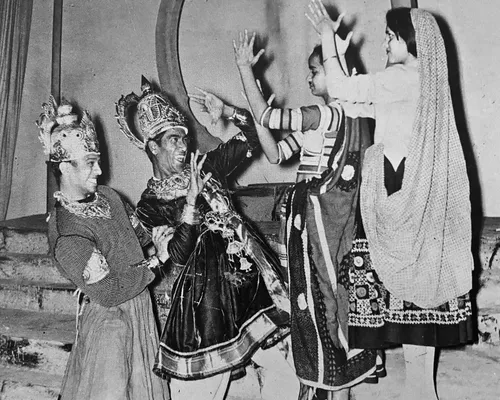
A play held at the 1860 Heritage Centre in 1963.
THE social and religious landscape of Hindus in Natal around 1909 reflects a profound tension between the institutional erosion of traditional social structures and the resilient reconstruction of spiritual life.
Under the oppressive system of indenture, early Indian migrants faced unprecedented challenges to their identity, yet they ultimately succeeded in anchoring their communities through religious practice, temple construction, and cultural preservation.
The system of indenture severely disrupted the traditional caste distinctions that had rigidly organised society in India. Because migrants were recruited as individuals rather than families or communities, maintaining strict caste separation became nearly impossible during the cramped, communal journey overseas.
This breakdown accelerated rapidly upon arrival on the sugar plantations, where workers performed the same tasks for identical wages, entirely disregarding ancestral status or spiritual taboos.
Housed closely together in barracks and subjected to communal bathing, indentured workers found their traditional ways of life systemically dismantled.
This painful loss of identity was vividly captured by an indentured worker named Ramadeen, who testified to the Wragg Commission of 1885 that he had broken his caste by eating with different people, lamenting that his friends in India would no longer associate with him, and that no fine could restore his lost status.
As caste boundaries faded, regional identities surfaced as the primary source of internal division among the workers. The broader population split into two distinct regional groups: the "Madrassee"; from South India and the "Calcuttia"; from North India.
The Protector of Indian Immigrants recorded numerous instances of friction, with workers from South India frequently refusing to work alongside their counterparts from North India, and vice versa.
Despite these deep regional frictions and the systemic erosion of caste, religion became the vital foundation around which the migrants reconstructed and organised their lives in South Africa. Almost immediately upon arrival, workers began reclaiming their spiritual heritage by building modest, wattle-daub-and-thatch shrines on the sugar estates.
Over time, these temporary structures evolved into permanent landmarks, beginning with the first wood-and-iron temple constructed in Rossburgh in 1869. Eventually, Hindu temples dotted the entire Natal coastline, serving as essential hubs for communal solidarity. These sacred spaces hosted major life cycle ceremonies - including births, marriages, and funerals - and became vibrant centers for major cultural festivals such as Thai Poosam, Diwali, Puratassi, Holi, and Krishna Jayanti.
By the early twentieth century, this localised spiritual revival caught the attention of visiting Indian missionaries, who sought to institutionalise and unite the diaspora. Intellectuals and spiritual leaders arrived in South Africa to establish vernacular education, offer formal religious training, and foster a broader sense of Hindu unity.
Professor Parmanand, who landed in Durban on August 5, 1905, founded the Hindu Young Men's Society to encourage the study of the Tamil language, promote missionary work, and inspire youth to visit India to reconnect with their heritage. He was soon followed by Swami Shankeranand in 1908, who aggressively expanded this mission by establishing Hindu societies across the length of Natal and convening national conferences.
The correspondence that follows highlights the religious and cultural observance of Hindus in 1909. The letter found in the Pietermaritzburg archives was forwarded to the Public Protector's office from the Colonial Secretary, as Swami Shankeranand wrote to the Protector of Indian Immigrants requesting that Diwali be recognised as a public holiday for Indians in Natal.
“Dear Mr Leslie, I am in receipt of yours of the 10th instant forwarding letter from Shankeranand Swami, asking that it may be arranged to set aside the 12th of November as a holiday to enable Indentured Hindoos to celebrate the Hindoo festival of Devali. The question is a very difficult one to form any decided opinion upon, in view of the conflicting religious interests of the various Indians in this Colony, but Hindoos in their own country are very prone to observe festivals, and Dubois and Beauchamp state that there are in all 18 obligatory Hindoo festivals in the year, six being principal ones.
"From my own knowledge, I remember being informed, while in Calcutta in 1903, that as a rule Mohammedans were employed in the hotels in Calcutta because the Hindoos were always leaving to attend some festival or other. I had before me today four Hindoos from Southern India and two from the Northern parts. Only one mentioned this festival of Devali, or as it is stated in the book referred to, Deepavali, Feast of Lamps.
"The same authority states that the Feast of Pongul is the most solemn of all. In all the centres where a considerable number of Indians are employed it is customary to give the Indians leave to attend the Mahorrum, the Mohammedan festival, and although a considerable number of Hindoos participate, it would be in their case, not a religious festival but merely a holiday celebration. It is quite apparent that nothing can be done this year, I understand a number of Hindoos in Durban are celebrating annually this festival of Devali. It is their intention to do so for the future, and whether it will be wise for Government to proclaim such a day as a day to observe a religious festival, as provided by Section 24, Law 25/1891, is a matter that requires further consideration.
"At present Indian Immigrants are only entitled to three days in each year, as previously stated, these days, in centres of large Indian population are given at the time of the Mahorrum, but not invariably so. Some employers choose, in their own time when work is slack on the Estate to let the Indians off.
"It appears to me the number of holidays allowed for Indians is quite inadequate, and I have had this subject in my mind for a considerable period, but have never broached the matter because of the difficulties in arriving at any recommendation which would be agreeable to the majority of the people concerned.
"As regards the people in Durban who are observing this festival, they would belong to the better class, and I am not still convinced that the general Indentured Indian population of the Colony would wish this day set apart. Of course, if it means an additional holiday, there would be a general agreement, but if it is found advisable to give the Hindoos a day for their festival, I think further enquiry is necessary.”
Ultimately, while the harsh realities of plantation labour stripped the migrants of their traditional social hierarchies, it was their unyielding commitment to faith and the institutionalisation of their religious practices that allowed the Hindu community of Natal to survive, unite, and flourish by 1909 and beyond.
Selvan Naidoo and Kiru Naidoo are the co-authors of the Indian Africans, together with Paul David and Ranjith Choonilall.
Originally published and reported by IOL South Africa.
Read original coverage on IOL South AfricaRelated Topics
Keywords
Related Stories
STEPPING UP: Simon Harmer’s transition from exile to Proteas’ top Test spinner
The spin bowler will surely be in the running for future Proteas inclusion after a magnificent performance against Australia in Cape Town.
CULTURAL TENSIONS: Is halaal food becoming more common in SA? Debunking viral myths
South Africa’s halaal food debate exposes misunderstandings about Islamic slaughter, religious freedom, voluntary certification and the commercial forces behind the growing number of halaal products.
ActionSA says stronger election result could give it coalition influence
ActionSA says stronger election result could give it coalition influence

Death of the ANC: Party suffers worst municipal result since 1994 as support falls to 30.81 percent
The ANC’s support has fallen to 30.81% in the 2026 local government elections, its worst municipal result since 1994, leaving it without an outright majority in any metro and facing renewed questions about its leadership.

Top Stories
STEPPING UP: Simon Harmer’s transition from exile to Proteas’ top Test spinner
CULTURAL TENSIONS: Is halaal food becoming more common in SA? Debunking viral myths
ActionSA says stronger election result could give it coalition influence

Australia reach World Cup final after Fiji scare
Death of the ANC: Party suffers worst municipal result since 1994 as support falls to 30.81 percent

Baze University acquires two aircraft as founder expands aviation education
Cape Town property prices surge 12%, more than twice Johannesburg's increase
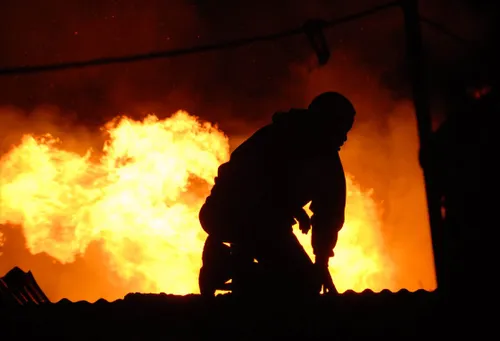
Two children killed in Kariega shack fire as father injured trying to rescue them
Latest
STEPPING UP: Simon Harmer’s transition from exile to Proteas’ top Test spinner
CULTURAL TENSIONS: Is halaal food becoming more common in SA? Debunking viral myths
ActionSA says stronger election result could give it coalition influence
Australia reach World Cup final after Fiji scare
Death of the ANC: Party suffers worst municipal result since 1994 as support falls to 30.81 percent
Baze University acquires two aircraft as founder expands aviation education
Cape Town property prices surge 12%, more than twice Johannesburg's increase
Two children killed in Kariega shack fire as father injured trying to rescue them