Three South African literary classics reissued for a new generation
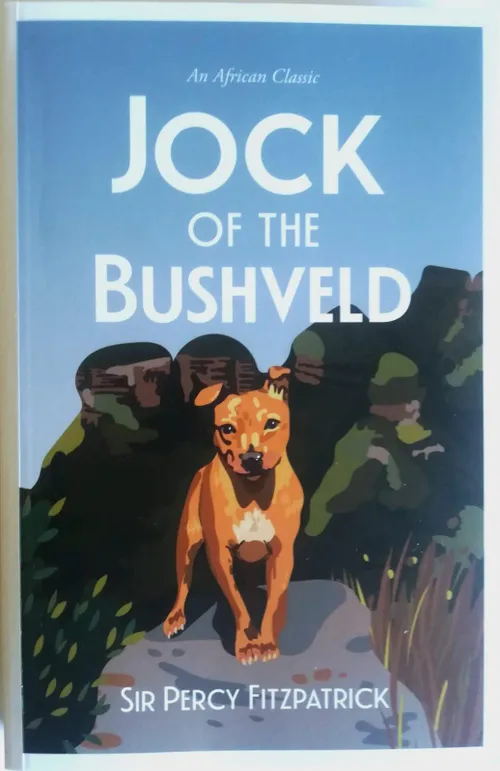
Sir Percy FitzPatrick's book, Jock of the Bushveld, which is part of a three-book reissue under "African Classics".
The publisher AD Donker has embarked on a project to reprint some of South Africa’s most notable literature. Entitled "African Classics", the first three novels are The Story of an African Farm, Jock of the Bushveld and Mhudi.
The publisher believes that great books endure because they continue to speak to new generations of readers. Opening a window into the past, these novels deepen our understanding of the societies and histories that have helped shape the present.
Oliver Schreiner's The Story of an African Farm which has been reissued under "The African Classics" series.
Many of the themes are universal, while some of the characters are surprisingly "modern". Nevertheless, these novels are still of their time, providing insight into the specific period, prejudices or society in which they are set. A drawback for the contemporary reader can be the language. A small number of racial slurs and derogatory terms have been replaced with neutral alternatives, but as far as possible, the original texts have been preserved.
The earliest novel is The Story of an African Farm by Olive Schreiner. When it was published in 1883, she used the pseudonym Ralph Iron, but for the second edition she revealed her identity. An immediate success, the novel draws on her own intimate knowledge of the Karoo, a vast often unsympathetic terrain "where profound thoughts about the meaning and purpose of life mirror the intensity of the landscape."
Sol T. Plaatje's book, Mhudi, is based on the historical events of the 1830s in South Africa, deeply rooted in African oral traditions, and constructed as a direct political allegory against the 1913 Natives' Land Act.
At its centre is Lyndall, who questions and challenges convention as she matures from girl to young woman.
There is something in her of Olive Schreiner herself, a feminist who sympathised with victims of cruelty or injustice. In her later years, she espoused wider franchise rights and better representation for black citizens, particularly when the Union of South Africa was under discussion in 1908 and 1909. She was posthumously awarded the Order of Ikhamanga in Gold in 2003.
Jock of the Bushveld drew its inspiration from Percy FitzPatrick’s own experiences as an ox-wagon transport rider in the late 1880s. He rescued Jock, the runt of a litter who grew into a fearless dog and loyal companion. The adventures of Jock were originally told by FitzPatrick to his four young children who adored his exciting stories.
Sol T. Plaatje. Educated only up to Grade 3, he nevertheless translated Shakespeare into Setswana and wrote two landmark books, "Native Life in South Africa" and "Mhudi".
By this time, he was living at Hohenheim, one of the largest, most magnificent mansions in Johannesburg’s Parktown, a far cry from his rough life as a transport rider. At the urging of Rudyard Kipling, FitzPatrick was persuaded to turn those stories into a book. Published in 1907 and dedicated to "those keenest and kindest critics, the likkle people", it was an immediate success, being reprinted four times that year.
The illustrations by Edmund Caldwell created the enduring image of Jock. The book has been translated into many languages including Afrikaans, isiXhosa and isiZulu. The US President, Theodore Roosevelt, wrote that it was "the best and truest story of a dog I have ever read." It is sometimes assumed that Sir Percy FitzPatrick was knighted in recognition of his literary achievements. In fact, his knighthood (in 1902) preceded Jock by five years and was in recognition of his work during the Anglo-Boer War.
Olive Schreiner in 1889, six years after The Story of an African Farm was published. Humanist and feminist, she was politically outspoken.
Sol Plaatje wrote Mhudi in 1919 and 1920, but it was not until 1930 that the pioneering Lovedale Press published it. Regarded as the first full length novel in English by a Black South African, it is the story of Mhudi and her husband Ra-Thaga. Like Lyndall in Schreiner’s novel, Mhudi is a strong woman, a characteristic which Ra-Thaga respected. Giving advice to a young unmarried Boer, he says: "A man was not made to live alone. Had it not been for Mhudi, I don’t think you would have known me at all. She made me what I am."
Unlike Jock and African Farm, Plaatje does not set his novel in his own times, but in the 1830s during the years of conflict with the Matabele (amaNdebele, the Bantu-speaking ethnic group native primarily to southwestern Zimbabwe who split from the Zulu), culminating in their defeat by an uneasy alliance between Ra-Thaga and his people with the Boers. Since the 1990s, the career and writings of Plaatje have attracted new research and a widening audience. In 2003, he was posthumously awarded the Order of Ikhamanga in Gold.
Sir Percy Fitzpatrick. Businessman, MP, and pioneering citrus farmer, it was his earlier experiences in his 20s as a transport rider with his dog Jock that would be his lasting legacy.
Each author writes evocatively of the landscapes in which the novels are set, but in Plaatje’s case there is an unsettling undercurrent either because its beauty has been blighted or because there lurks an unknown danger.
These three novels benefit from a re-evaluation by each new generation of readers; each novel was written by an author who also had a wider influence on South African history. That contribution, too, has been, and will continue to be, reassessed.
The "African Classics" begins on a promising note, and with striking cover designs by Stella Joubert, could be a series which readers will enjoy collecting.
Related Topics
Keywords
Related Stories
ORIGIN STORY: Georgia’s wines take you on a wild but enjoyable ride
As with anything you should start at the beginning. And Georgia’s long history of wine – it was invented here, 8,000 years ago – is as rich and complex as they come, a whole universe to unpack.

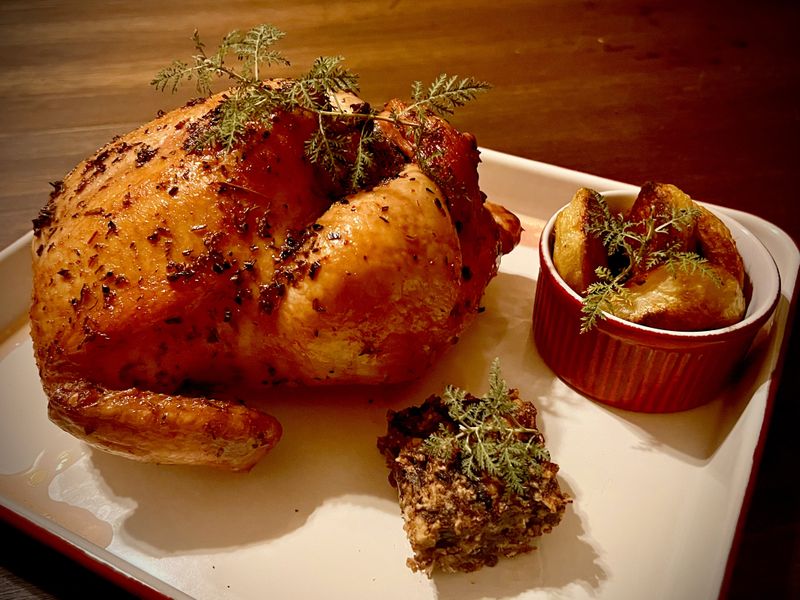
WHAT’S COOKING: Roast chicken with a walnut and date stuffing
Here’s a recipe first published in 2022, delivered to you again while your Food Editor is on leave. A stuffing of walnuts and dates with fynbos herbs makes this fresh way with a roast chicken a class act worth sharing with friends at the dinner table.
Osun govt warns Oluwo over alleged ‘inflammatory’ remarks, fears religious, communal conflicts
The Osun State Government directed the Oluwo to refrain from public statements capable of triggering religious and inter-town conflicts. The post Osun govt warns Oluwo over alleged ‘inflammatory’ remarks, fears religious, communal conflicts appeared first on Premium Times…

Man shot dead outside Bushbuckridge voting station
Police are investigating a case of murder after a fatal shooting outside a voting station in MP

Top Stories
ORIGIN STORY: Georgia’s wines take you on a wild but enjoyable ride
WHAT’S COOKING: Roast chicken with a walnut and date stuffing
Osun govt warns Oluwo over alleged ‘inflammatory’ remarks, fears religious, communal conflicts

Career-best Wembanyama display seals Spurs win
Man shot dead outside Bushbuckridge voting station

England captain Kane signs new Bayern contract

Tomi Falade leads Nigerian writers to 2026 Helsinki Book Fair
Water, electricity failures dominate voters’ concerns across South Africa

Latest
ORIGIN STORY: Georgia’s wines take you on a wild but enjoyable ride
WHAT’S COOKING: Roast chicken with a walnut and date stuffing
Osun govt warns Oluwo over alleged ‘inflammatory’ remarks, fears religious, communal conflicts
Career-best Wembanyama display seals Spurs win
Man shot dead outside Bushbuckridge voting station
England captain Kane signs new Bayern contract
Tomi Falade leads Nigerian writers to 2026 Helsinki Book Fair
Water, electricity failures dominate voters’ concerns across South Africa