Understanding drone laws: Expert warns of misuse implications
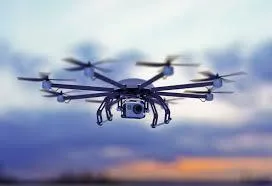
A legal expert warns that the misuse of drones can result in criminal prosecution, coupled with heavy penalties.
Image: Supplied
Police warnings ahead of this year’s Comrades Marathon, along with increasing neighbourhood incidents, are revealing widespread breaches of aviation and privacy law.
This is according to Cor van Deventer, director at Van Deventer Dowlath and Marx Incorporated, who says the public warning by the police that the entire 86km Comrades Marathon route was a “no-fly zone” and that unauthorised drones would be “taken down operationally”, highlighted concerns around the country’s illegal drone activity.
Ahead of the race, the SAPS announced that unauthorised drones would be shot down and later stated that “counterintelligence measures” would be used to disable them.
The Comrades Marathon Association issued its own notice reinforcing the ban, citing aviation law, safety concerns, and the risk of interference with emergency operations.
“When the SAPS is prepared to disable drones during a major national event, it underscores that these devices are regulated aircraft. They’re not toys. They carry legal consequences,” Van Deventer says.
According to Van Deventer, the Comrades' enforcement plan is more than a once-off security measure. “It’s a sign that drone misuse has reached a point where public safety, privacy, and aviation law are being affected.”
He warns that the first drone court case is coming. “It’s just a matter of time until a court is asked to rule on unlawful drone operations, because the incidents we are seeing now are neither isolated nor harmless.”
South Africa’s drone laws fall under the Civil Aviation Act 13 of 2009 and Part 101 of the Civil Aviation Regulations.
Van Deventer explains the rules apply to all drones except the smallest toy-grade devices.
Van Deventer warns that most of the drone flights happening in suburbs, along roads, or near complexes are actually unlawful. Capturing footage of identifiable individuals or private property without consent is also illegal in terms of the Protection of Personal Information Act (POPIA), and will expose operators to civil and criminal liability, he warns.
Among the complaints he’s recently received is a report by a Cape Town resident of a man who regularly walks along the pavement directly outside her gated complex and opposite another estate, flying a drone overhead.
Van Deventer explains this particular incident involves several legal breaches, which include POPIA violations and repeated flights that could amount to harassment.
According to Van Deventer, private individuals are not allowed to disable a drone as it is an aircraft in the eyes of the law, and interfering with an aircraft carries heavy penalties.
The SAPS and authorised state bodies are permitted to disable drones, but only under controlled conditions and only when justified by public safety or aviation security mandates.
Van Deventer recommends that organisations responsible for land, shared spaces, or precinct management immediately implement drone-use policies in line with national aviation law.
These policies should prohibit unauthorised flights entirely, only allowing accredited operators who hold valid remote pilot licences and remote operator certificates to conduct approved work such as security or maintenance.
Related Topics: